Export & Logistics
Exporting Custom Teamwear Worldwide: Lead Times, Packing and Logistics Explained
How a custom teamwear order travels from artwork approval to your warehouse — production stages, realistic lead times, packing standards, export documentation and the freight options that fit each order size.
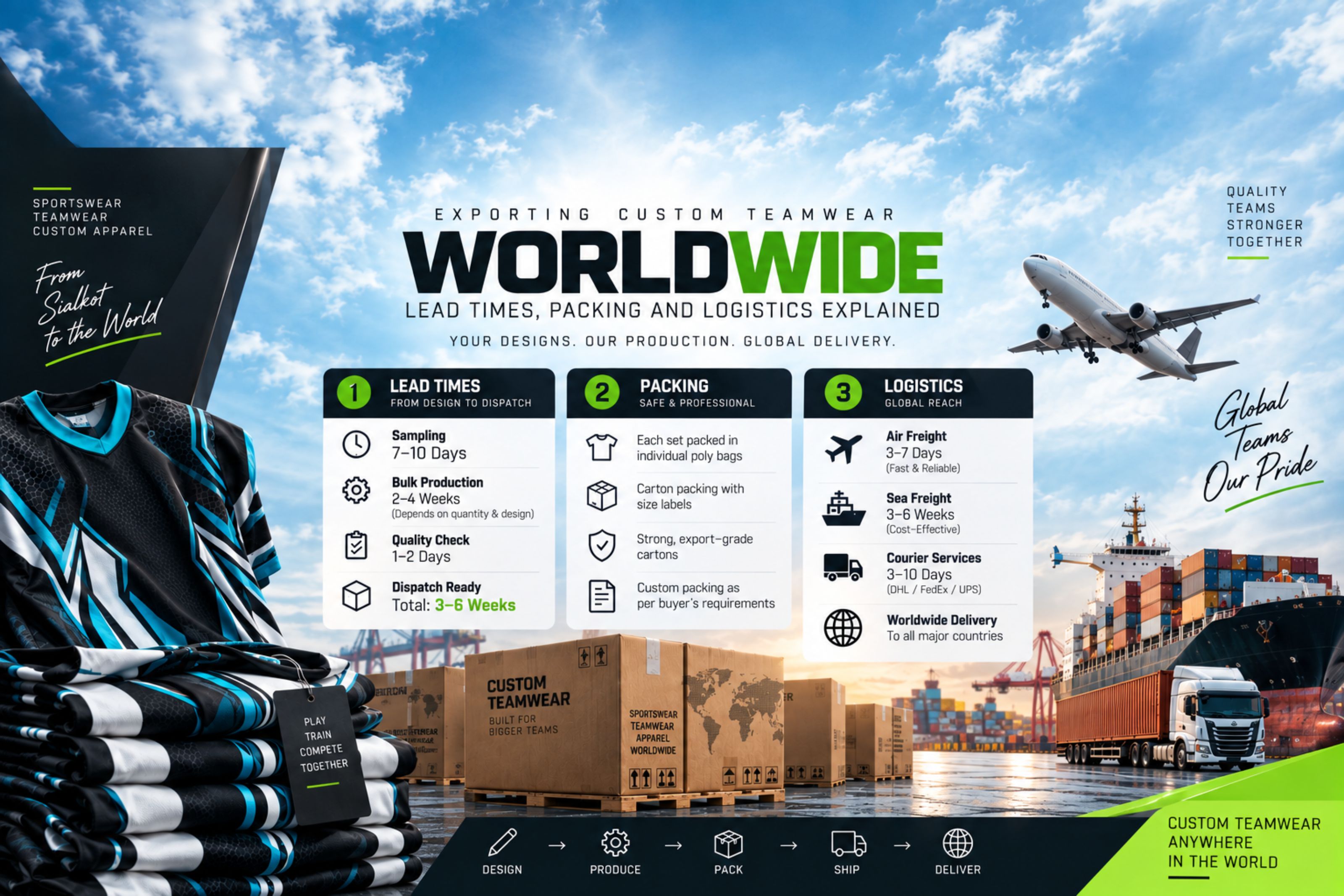
From artwork to arrival
Wholesalers and clubs rarely lose money on the garment. They lose it on timing. Understanding how an export order actually moves lets you plan launch dates, pre-season deliveries and reorders with confidence. This is the workflow we follow at Rare Signs Apparel for international teamwear programmes.
Stage 1: Artwork, tech pack and quotation
We start from your artwork, sizing chart and reference garments. At this stage we confirm fabric, GSM, colour references, branding methods and packing requirements, then issue a costed quotation per style.
Stage 2: Pre-production sampling
A sample is produced and photographed or shipped for approval. Revisions are logged against the tech pack so the bulk run matches the approved sample rather than the original sketch.
Stage 3: Bulk production
Cutting, printing or embroidery, stitching and finishing run as a scheduled batch. In-line inspection catches print registration, stitching and measurement deviations while the line is still running, not after packing.
Stage 4: Quality control and packing
Every export order is checked against a measurement tolerance sheet and a visual standard. Packing follows international retail and wholesale norms:
- Individual polybags with size stickers
- Custom neck labels, size labels and hang tags where specified
- Assorted or solid size ratios per carton, as requested
- Carton marking with style, colour, size breakdown, quantity and destination
- Packing list and invoice matched to carton numbers
Stage 5: Freight selection
The right mode depends on volume and urgency:
- Express courier — sample packs and small urgent club orders, typically the fastest door-to-door option
- Air freight — mid-size seasonal orders where launch dates are fixed
- Sea freight — large wholesale and retail programmes where cost per unit matters most
Stage 6: Documentation and clearance
Export paperwork usually includes the commercial invoice, packing list, certificate of origin where applicable and the airway bill or bill of lading. Accurate HS classification and consistent descriptions across documents are what keep shipments moving through customs without inspection delays.
Planning realistic timelines
Work backwards from the date the stock must be in your warehouse, and reserve time for sampling and approvals — that is the stage buyers most often underestimate. Locking artwork early is the single biggest lead-time saving available to you.
Reordering without surprises
Because approved tech packs, fabric records and print files stay on file, repeat orders reproduce the same fit and colour. For clubs running multi-season kits and distributors holding stock, that continuity is the difference between a supplier and a partner.
Markets we serve
Rare Signs Apparel exports custom sportswear, teamwear, fitness apparel and corporate uniforms to clients across North America, Europe, the Middle East, Australia and Asia.
Request an export quotation
Share your styles, quantities, destination and required delivery date. Our export team will reply with a production plan, packing specification and freight recommendation. Contact us on WhatsApp or submit an enquiry to get started.
Planning a production run?
Share your styles, quantities and target market. Our export team replies with fabric options and a delivered price.


